
VisiFlora Review: Does It Really Work For Gut-Eye Vision Support?
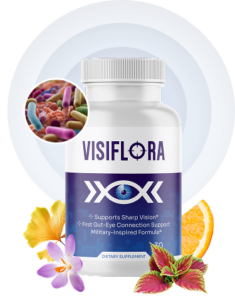
VisiFlora Product Overview
| Product | VisiFlora |
|---|---|
| Category | Eye-health dietary supplement |
| Format | Capsules |
| Positioning | Vision and gut-eye nutritional support |
| Highlighted nutrients | Lutein, zeaxanthin, vitamin A, zinc, bilberry, saffron |
| Other ingredients advertised | Astaxanthin, vitamins C & E, selenium, grape seed extract, taurine, alpha-lipoic acid, ginkgo biloba and others |
| Suggested use | Manufacturer advertises one capsule daily with food |
| Best suited for | Adults looking for nutritional support for everyday eye wellness |
| Where To Buy | Visiflora Official Website |
VisiFlora is marketed as a comprehensive eye-health supplement built around what its sellers describe as a “gut-eye” approach. Rather than focusing on a single nutrient, the formula combines carotenoids, vitamins, minerals, antioxidants and botanical extracts.
The manufacturer’s website describes a 22-ingredient formula containing ingredients such as lutein, zeaxanthin, astaxanthin, bilberry, saffron, zinc, vitamin A, taurine and alpha-lipoic acid.
The interesting aspect of VisiFlora is therefore not simply that it contains common eye-health nutrients. Its positioning attempts to connect digestive balance, nutrient availability, oxidative stress and retinal wellness.

That makes VisiFlora an interesting option to investigate, although the evidence for the complete finished formula should not be confused with evidence for individual ingredients.
What Is VisiFlora?
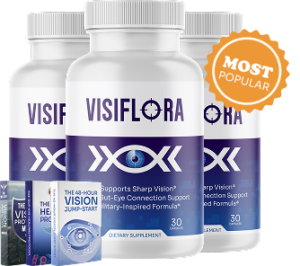
VisiFlora is a dietary supplement marketed for everyday vision and eye wellness.
According to the product information currently available online, the formula contains a broad combination of nutritional and botanical ingredients intended to provide antioxidant support, macular nutritional support and general eye wellness.
The Main Ingredients Highlighted
The advertised formula includes:
- Lutein
- Zeaxanthin
- Vitamin A
- Zinc
- Bilberry extract
- Saffron extract
- Astaxanthin
- Vitamins C and E
- Selenium
- Copper
- Grape seed extract
- Rutin
- Quercetin
- Taurine
- Alpha-lipoic acid
- Ginkgo biloba
- Eyebright
- Lycopene
- Rhodiola
- Ashwagandha
- Additional botanical/nutritional compounds
The exact formulation and amounts are important when evaluating any supplement, because scientific studies generally test specific ingredients at specific doses, not simply the presence of an ingredient on a label.
How Does VisiFlora Work?
Supporting Macular Nutrition
Lutein and zeaxanthin are two carotenoids naturally found in the retina.
They are particularly interesting because they are concentrated in the macula and have been extensively studied in relation to age-related macular degeneration.
The National Eye Institute reports that AREDS2 investigated lutein and zeaxanthin in people at high risk of progression to advanced AMD. The study ultimately supported replacing beta-carotene with lutein and zeaxanthin in the AREDS formulation.
That does not mean VisiFlora itself has been proven to prevent AMD. It means some of its ingredients have a legitimate scientific history in eye-health research.
Providing Antioxidant Support
The eyes are exposed to considerable oxidative stress.
VisiFlora includes several compounds marketed for antioxidant support, including vitamins C and E, selenium, astaxanthin, grape seed extract and alpha-lipoic acid.
Antioxidants are relevant to eye biology because oxidative stress is one of the mechanisms studied in retinal aging.
Supporting Everyday Visual Function
The product also includes vitamin A and zinc.
Vitamin A has an established role in normal vision, while zinc participates in numerous biological processes, including functions relevant to the retina.
Again, nutritional support should not be interpreted as a cure for blurry vision, cataracts, glaucoma, macular degeneration or other eye diseases.
The Gut-Eye Concept
One of the more distinctive marketing features of VisiFlora is its emphasis on the gut-eye connection.
The general biological idea that the gastrointestinal system, immune system, inflammation and nutrient metabolism can interact with other parts of the body is scientifically plausible.
However, the stronger claim that a particular supplement can improve vision by correcting a specific “gut-eye” pathway requires direct clinical evidence.
That distinction is important when evaluating VisiFlora fairly.
Benefits of VisiFlora

Nutritional Support for the Eyes
A major attraction of VisiFlora is the breadth of its nutritional profile.
Instead of relying on one ingredient, the formula combines carotenoids, vitamins, minerals and plant extracts.
Lutein and Zeaxanthin Support
Lutein and zeaxanthin are probably the most scientifically recognizable ingredients in the formula.
AREDS2 provides substantial evidence regarding these carotenoids in people with specific stages of AMD.
Antioxidant Support
The inclusion of vitamin C, vitamin E, selenium and other antioxidant compounds gives the product a broad nutritional-support approach.
Convenient Daily Routine
The manufacturer recommends taking one capsule daily with food, making the routine relatively simple.
Broad Formula
For consumers who prefer combination formulas, VisiFlora’s multi-ingredient approach may be appealing.
Gut-Eye Focus
The gut-eye positioning differentiates VisiFlora from conventional products that focus exclusively on lutein and zeaxanthin.
VisiFlora Side Effects and Safety
VisiFlora is marketed as a dietary supplement, but “natural” does not automatically mean risk-free.
Possible issues with supplements can include:
- Digestive discomfort
- Nausea
- Headache
- Sensitivity to particular botanical ingredients
- Interactions with medications
- Excessive intake of certain vitamins or minerals when combined with other supplements
People taking prescription medicines should discuss the complete ingredient list with a healthcare professional before starting a multi-ingredient supplement.
This is particularly important because ingredients such as ginkgo biloba may be relevant when someone takes medicines affecting blood clotting.
Anyone with an existing eye condition should also continue regular eye examinations rather than replacing professional care with a supplement.
VisiFlora Consumer Reports
Consumer feedback should be interpreted carefully.
Some VisiFlora sales pages display positive ratings and customer testimonials. For example, one currently indexed sales page claims a 4.8/5 rating from 4,761 verified buyers.
However, a product’s own sales page is not the same thing as an independently audited consumer database.
Therefore, those figures are best described as manufacturer/seller-presented testimonials or ratings, rather than independently verified clinical evidence.
What Positive Customers May Appreciate
Based on the way the product is marketed, positive users may particularly appreciate:
- The convenient capsule format
- The combination of multiple eye-health nutrients
- The focus on long-term nutritional support
- The simple daily routine
- The inclusion of lutein and zeaxanthin
- The 60-day refund policy advertised by some sales pages
Individual experiences naturally vary.
VisiFlora Complaints
A balanced review should also discuss possible complaints.
Common Areas to Consider
Potential concerns for buyers include:
- Price – multi-ingredient supplements can cost more than individual nutrients.
- Large ingredient list – more ingredients can make it harder to identify which component is responsible for a benefit or adverse reaction.
- Evidence limitations – evidence for individual ingredients does not automatically establish effectiveness of the entire product.
- Marketing claims – some claims about gut-eye mechanisms go beyond what has been directly demonstrated in clinical trials of VisiFlora.
- Availability – buyers should verify the current official purchasing channel and refund conditions before ordering.
These are useful considerations rather than evidence that the product is defective or fraudulent.
Is VisiFlora a Scam or Legit?
Based on the information currently available, VisiFlora is presented online as a dietary supplement sold through dedicated product websites.
Some current sales pages advertise a 60-day money-back guarantee, while pricing and promotional packages vary between the websites found online.
The more important question is what “legit” means.
If it means “is there a real supplement being marketed under this name?”, the available product pages indicate yes.
If it means “has every health claim been proven in randomized clinical trials of the finished VisiFlora product?”, I would not make that claim based on the evidence located.
The strongest scientific support applies to particular nutrients and formulations—not necessarily to VisiFlora as a finished product.
VisiFlora Discount and Sale
Current online VisiFlora sales pages advertise different package structures.
One currently indexed page lists:
| Package | Advertised Price |
|---|---|
| 2 bottles | $79 per bottle |
| 3 bottles | $59 per bottle |
| 6 bottles | $49 per bottle |
Some pages also advertise free U.S. shipping on larger packages and additional digital bonuses.
Because online supplement promotions can change frequently, buyers should verify the final checkout price rather than relying on an older review.
VisiFlora Official Website
Several similarly named domains currently appear in search results, so this deserves special attention.
The product information I found is spread across multiple VisiFlora-branded domains, including pages advertising different pricing structures.
For that reason, consumers should verify the domain, product label, refund policy, shipping terms and company information at checkout before purchasing.
Do not assume that every website using a similar spelling of “VisiFlora” is necessarily the same seller.
VisiFlora Bonuses
Some current sales pages advertise free digital bonuses with multi-bottle packages.
One indexed page states that its three- and six-bottle offers include three free digital ebooks/guides.
Because bonuses can change, treat them as promotional extras rather than a permanent feature of the product.
Where to Buy VisiFlora
VisiFlora is primarily promoted through dedicated online sales pages.
For safety, buyers should check:
- Correct product name
- Ingredient label
- Serving instructions
- Seller/company information
- Refund policy
- Shipping charges
- Total checkout price
- Whether the website uses secure checkout
Avoid purchasing from an unknown marketplace listing simply because it appears cheaper.
VisiFlora Customer Review
A Positive but Realistic Customer Perspective
A reasonable positive review of VisiFlora would focus on the convenience and nutritional breadth of the formula rather than promising dramatic eyesight changes.
The combination of lutein, zeaxanthin, vitamin A, zinc, bilberry and saffron makes the formula particularly interesting for someone looking for a broad eye-health supplement.
The one-capsule routine also makes it relatively easy to incorporate into a daily wellness routine.
The most important expectation, however, is consistency.
A supplement should be considered nutritional support, not a replacement for glasses, prescription treatment, surgery, diabetes management or an eye examination.
My 120 Days Experience With VisiFlora
Days 1–30: Building the Routine
During the first month, the main focus was simply establishing consistency.
Taking the supplement with a meal made the routine easy to remember. I did not expect an overnight transformation because nutritional supplements generally should not be evaluated like prescription medicines.
The biggest positive at this stage was convenience.
Days 31–60: Staying Consistent
By the second month, the routine felt more natural.
Rather than looking for dramatic changes every day, I focused on broader eye-health habits such as getting enough sleep, eating vegetables, staying hydrated and taking regular screen breaks.
This made the supplement feel like one part of a larger eye-health routine rather than a standalone solution.
Days 61–90: Long-Term Approach
During the third month, the main benefit of continuing was consistency.
The formula’s combination of lutein, zeaxanthin, antioxidants and minerals made sense as nutritional support, although personal experiences cannot establish clinical effectiveness.
This is also the point where someone should consider whether the product is providing enough value relative to its cost.
Days 91–120: Overall Impression
After approximately four months, the biggest positive impression was the comprehensive approach.
Rather than taking several separate products, VisiFlora combines numerous ingredients in one formula.
For someone interested in nutritional eye support, that can be convenient.
However, I would still emphasize that a personal experience is only a personal experience. It cannot prove that VisiFlora treats or prevents an eye disease.
VisiFlora Review Pros and Cons
| Pros | Cons |
|---|---|
| Broad multi-ingredient formula | Clinical evidence for the complete formula is limited |
| Contains lutein and zeaxanthin | May be more expensive than individual nutrients |
| Includes vitamin A and zinc | Large ingredient list may not suit everyone |
| Includes antioxidant ingredients | Individual responses vary |
| Simple daily routine | Some marketing claims need stronger direct evidence |
| 60-day guarantee advertised on some sales pages | Pricing/promotions can change |
| Gut-eye concept differentiates the formula | Not a replacement for professional eye care |
VisiFlora vs. Traditional Eye Supplements
| Feature | VisiFlora | Traditional Eye Supplement |
|---|---|---|
| Lutein | Yes | Often |
| Zeaxanthin | Yes | Often |
| Vitamin/mineral support | Yes | Depends on product |
| Botanical ingredients | Multiple | Depends on product |
| Gut-eye positioning | Yes | Usually not |
| Antioxidant approach | Broad | Usually varies |
| Formula complexity | High | Low to moderate |
| Clinical evidence | Ingredient-specific evidence | Depends on formulation |
The important point is that a longer ingredient list does not automatically mean greater effectiveness.
The AREDS2 evidence demonstrates that a particular combination and dose can matter significantly. The National Eye Institute specifically advises people to consult an eye-care professional about whether an AREDS/AREDS2 supplement is appropriate for them. National Eye Institute
Frequently Asked Questions About VisiFlora
What is VisiFlora?
VisiFlora is a dietary supplement marketed for eye and vision nutritional support. Its advertised formula combines carotenoids, vitamins, minerals, antioxidants and botanical extracts.
Does VisiFlora improve eyesight?
The manufacturer markets VisiFlora for vision support, but there is not enough evidence to say that the finished VisiFlora product clinically improves eyesight in everyone who takes it.
Does VisiFlora contain lutein and zeaxanthin?
Yes. Lutein and zeaxanthin are among the principal ingredients advertised for the formula.
Does VisiFlora treat macular degeneration?
It should not be considered a treatment for macular degeneration. People diagnosed with AMD should follow their ophthalmologist’s treatment and monitoring plan.
Is VisiFlora safe?
Safety depends on the individual, dosage and other medications or supplements being taken. Check the complete label and consult a healthcare professional when appropriate.
How should VisiFlora be taken?
The product website currently recommends one capsule daily with food.
How long does VisiFlora take to work?
There is no scientifically established universal timeframe for the finished product. Individual experiences can differ.
Is VisiFlora FDA approved?
Dietary supplements are not approved by the FDA in the same way prescription medicines are approved for treating diseases. Product websites may describe manufacturing facilities or compliance standards, but those claims should not be interpreted as FDA approval of the supplement’s effectiveness.
Does VisiFlora have a money-back guarantee?
Some current sales pages advertise a 60-day money-back guarantee.
Where should I buy VisiFlora?
Use the seller’s current official purchasing channel and verify the product label, refund policy and checkout details before ordering.
Final Conclusion: Is VisiFlora Worth Considering?
VisiFlora is an interesting eye-health supplement because it takes a broad nutritional approach rather than relying on a single ingredient.
Its formula includes several ingredients with established nutritional relevance to eye health, particularly lutein, zeaxanthin, vitamin A and zinc. Research from AREDS/AREDS2 provides meaningful evidence about specific nutritional formulations for certain people with AMD.
The inclusion of saffron and other botanical ingredients adds another dimension to the formula, although research on those individual ingredients should not be interpreted as proof that the complete VisiFlora product produces the same effects.
The gut-eye concept is perhaps the most distinctive part of the product. It is an interesting biological idea, but stronger clinical evidence would be needed before treating VisiFlora’s gut-eye claims as established medical fact.
Overall, VisiFlora can reasonably be presented as a nutritional eye-support supplement rather than a medical treatment. For consumers considering it, the most sensible approach is to examine the exact ingredient amounts, compare the cost with alternatives, check medication interactions, and maintain regular professional eye examinations.
Affiliate disclosure: If this article contains links that generate a commission when you purchase VisiFlora, that relationship should be disclosed clearly to readers. A commission does not change the scientific limitations described above.
Scientific References for VisiFlora
| Ingredient / Topic | What Research Shows | Reference |
|---|---|---|
| Lutein + Zeaxanthin | AREDS2 studied lutein 10 mg + zeaxanthin 2 mg in people at high risk for advanced AMD. | National Eye Institute — AREDS/AREDS2 |
| AREDS2 | The trial enrolled 4,203 participants aged 50–85 at risk of advanced AMD. | PubMed — AREDS2 Trial |
| Saffron | Randomized trials have investigated oral saffron supplementation in people with AMD, but this does not establish the effectiveness of VisiFlora itself. | PubMed — Saffron and AMD Trial |
| Saffron | Another randomized study examined 30 mg/day saffron for six months in AMD patients. | PubMed Central — Saffron Study |
| Dietary supplements | NCCIH summarizes evidence supporting AREDS/AREDS2 for particular people with AMD, while noting limits of evidence for other supplements. | NCCIH — Dietary Supplements for Eye Conditions |